
At Bayshire Yorba Linda, we understand that healthy aging requires much more than physical well-being. Especially for memory care residents, mental well-being takes a different shape.
Living with constant stress and unpredictability can make it difficult to find a sense of calm. For seniors, meditation can be a powerful tool for restoring balance. The meaningful benefits that meditation offers for the mental well-being of seniors with memory issues like Alzheimer’s are significant.
It’s different from some mindfulness practices that focus primarily on mental and emotional wellness. Meditation goes beyond that. Think of meditation as an intentional practice that helps individuals reconnect with themselves, away from distractions. It helps clear and quiet the mind. Let’s explore the many benefits of meditation for seniors in this blog. We’ll also cover some accessible meditation techniques that residents can practice in memory care communities.
Key Benefits Of Meditation For Seniors In Memory Care
Meditation is one of the best natural ways to support senior mental health in memory care. It brings a sense of calm and helps residents connect with the present. Practicing it, they don’t feel overwhelmed with the past or worry about the future. One lets go of the distractions and calms the nervous system. Here’s how all this is done and how it benefits memory care residents.
Reduces Agitation And Anxiety
Agitation and anxiety affect almost 90% of individuals with dementia and often lead to increased mortality, faster cognitive decline, and accelerated institutionalization. Often conceived as unorthodox behaviors such as pacing, aggression, and sundowning, they stem from fear, confusion, or unmet needs. Memory care incorporates meditation as a ‘quiet zone,’ helping calm the mind and reduce the confusion, frustration, and anxiety often experienced by individuals with dementia.
Enhances Cognitive Function
For memory care patients, cognitive support is essential, as it dictates their ability to process, retain, and retrieve information. It impacts their daily independence, identity, and disease progression. For this, too, meditation proves valuable. It helps improve memory, concentration, and mental clarity by increasing blood flow to the brain. Regular practice of meditation also helps strengthen neural connections that typically deplete due to the progression of dementia.
Boosts Emotional Well-Being
For patients with memory loss, emotional well-being is also critical. Feeling positive, secure, and socially connected directly helps reduce the slowdown of cognitive decline, reduce agitation, and enhance quality of life. Therefore, memory care communities encourage meditation techniques such as guided imagery and mindfulness to promote relaxation, improve mood, and foster inner peace. Being frequently conducted as a group activity in memory care communities, it even helps residents form social connections with peers.
Eases Physical Tension
Not due to memory issues, but due to aging, seniors can often face physical tension. It occurs due to age-related tissue degeneration, reduced muscle mass, decreased joint flexibility, and other factors. Focused, gentle meditation, led by professional instructors, helps memory care residents release muscle stiffness and pain associated with aging.
Improves Sleep Quality
Insomnia and related sleep disturbances are common among individuals with memory impairment. They cause issues like nighttime walking and fragmented sleep, both of which affect their mental well-being and quality of life. Meditation is a significant element of calming routines for memory care residents, promoting relaxation and helping combat insomnia. When practiced before bedtime, it helps improve sleep quality.
Accessible Meditation Techniques For Memory Care
Among the many mindfulness activities available to memory care residents, meditation reigns supreme. When practiced under the guidance of a professional, it offers benefits such as reduced anxiety, enhanced focus, and better stress management. Even a simple, consistent 10-15 minute daily session can yield visible benefits, such as a calmer nature. Here are some of the most powerful meditation-related mental wellness activities in senior living that residents can practice.
Mindful Breathing
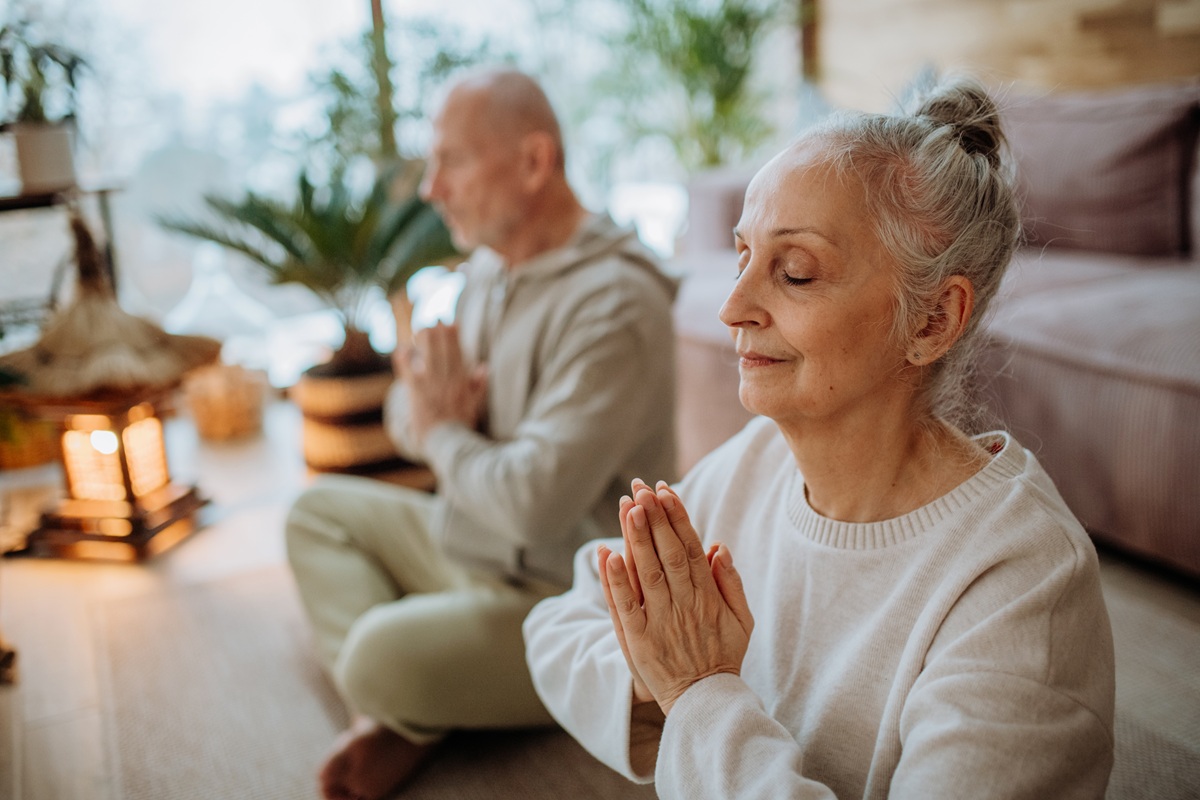
It’s one of the most widely preferred meditation techniques that helps seniors anchor their attention in the present moment. It helps them shape and increase their body-mind awareness. For this, they need to focus on their breath in the present moment; no tool or equipment is needed. Under this, the individual focuses on slow, deep nasal inhales and long mouth exhales. They can do it either sitting or lying down on their back.
Guided Imagery
For seniors with chronic pain that occurs due to arthritis, neuropathy, or other related conditions, this meditation technique is best. Just like other calming techniques, it brings attention to the present moment and helps quiet the mind’s noise. This calmness eventually leads to a reduced perception of pain and enhanced overall body function. It is facilitated either using spoken words, relaxing music, or guided imagery as instructed by a professional.
Mindful Listening
This one’s a gentle, sensory-focused meditation practice that uses calming music, nature sounds, or bird songs to reduce reactivity in memory care patients. This technique also directs the patient’s attention to the present moment, acting as a grounding, non-pharmacological tool to reduce anxiety, agitation, and stress in patients with Alzheimer’s and other forms of dementia.
Gentle Movement
It’s a therapeutic, low-impact meditation technique that prompts mindfulness through slow, intentional physical movements. The benefits? It’s an enhanced quality of life, reduced anxiety, and better social connections. It usually integrates tai chi or yoga, combining movements that feel good to seniors rather than any strict activity, making it accessible even for those with limited mobility.
Consider Bayshire Yorba Linda For Comprehensive Memory Care Solutions
At Bayshire Yorba Linda, we recognize that many people think of meditation as a stress-buster, but in reality, it is a holistic tool for mental well-being. It brings a whole lot of benefits for seniors with memory issues like those of Alzheimer’s and other forms of dementia. When practiced rightly, it enhances mental clarity, cognitive function, and emotional well-being while reducing agitation and anxiety and easing physical tension.
To reap the multitude of benefits meditation and related mental wellness-boosting techniques offer for memory-impaired individuals, it’s best for seniors to choose a memory care community that supports comprehensive wellness. For that, you can consider us at Bayshire Yorba Linda. Contact us today and learn more about our care plans and schedule a tour.